

Why Spring Is the Most Dangerous Season for Your Dog's Health (And What to Do About It)

Spring feels like a fresh start — longer walks, warmer air, your dog finally bouncing around the garden again. But veterinarians see a very different picture. Spring is the season when the most health problems surface in dogs. And most owners don't realise until it's too late.
Here's the good news: almost every spring-related health issue is preventable — if you know what to look out for and act early enough. This guide covers exactly that.
The Hidden Toll of Winter

Most dogs emerge from winter in worse shape than you'd think. Reduced sunlight, less physical activity, and months of stale indoor air take a real toll — especially on the gut and immune system.
Around 70% of your dog's immune function is rooted in the gut. If the gut microbiome has been disrupted over winter — through less varied movement, lower-quality seasonal nutrition, or stress — your dog enters spring already compromised. That's exactly when seasonal challenges hit hardest.
Pollen, Grasses, and Seasonal Allergies

Spring means pollen season. And for a growing number of dogs, that means itching, scratching, inflamed skin, watery eyes, and constant paw licking.
What many owners don't realise: seasonal allergies in dogs are rarely just about pollen. They're usually the visible result of a deeper imbalance. A dog with a healthy gut barrier and a strong immune system can handle the same pollen load that sends a compromised dog into a full-blown allergic reaction.
If your dog scratches more in spring, don't just treat the symptoms — look at the gut first. A weakened intestinal barrier allows allergens to trigger a much stronger immune response than they otherwise would.
Ticks, Fleas, and Parasites Are Back

As soon as temperatures consistently reach 7–8°C, ticks become active. Fleas aren't far behind. And spring is also prime time for intestinal parasites picked up on walks.
What you should do right now:
- Check your dog for ticks after every walk — especially behind the ears, between the toes, around the groin, and under the collar
- Start or renew your tick and flea prevention protocol (consult your vet on the right product for your region)
- Schedule a faecal test to check for intestinal parasites — spring is peak reinfection season
- Keep your garden trimmed; ticks thrive in tall grass and damp leaf litter
A strong immune system is your dog's first internal line of defence. Dogs with robust gut health and immune function handle parasite exposure significantly better than those already weakened from winter.
Shedding and Coat Health

Spring shedding is normal. But excessive shedding, dull fur, dandruff, or dry, flaky skin are not. These are signs that something deeper is off — and the gut is almost always involved.
If your dog's coat doesn't look healthy after shedding, don't just switch to a "coat health" shampoo. Look at what's happening on the inside first. Nutrient absorption, gut barrier integrity, and immune function all directly influence how your dog's skin and coat regenerate after winter.
Practical coat care tips for spring:
- Brush your dog regularly (daily during heavy shedding) to remove dead undercoat and stimulate circulation
- Feed omega-3-rich foods or supplements to support skin barrier recovery
- Avoid over-bathing — it strips the skin's natural protective oils
- Monitor for hot spots, redness, or persistent scratching — these are red flags, not normal shedding symptoms
Is Your Dog Eating More Grass?

Many owners notice their dogs eating more grass in spring. It's easy to dismiss — but it's actually a signal worth paying attention to.
Increased grass eating is one of the most common (and most ignored) signs that your dog's digestive system needs support. If you notice it, consider it a nudge to look at gut health more closely rather than waiting for bigger symptoms to appear.
The Spring Exercise Trap
After months of shorter, slower winter walks, many owners suddenly ramp up activity in spring. Long hikes, off-lead runs, intense play sessions. Your dog is thrilled — but the body isn't always ready.
What Happens When You Ramp Up Too Fast
- Joint and muscle injuries — especially in older dogs or breeds prone to joint issues
- Digestive upset — sudden changes in exercise intensity can disrupt gut motility
- Exhaustion and immune suppression — overexertion weakens immune function, making your dog more susceptible to infections right when environmental challenges peak
The smart approach: increase walk duration and intensity gradually over 2–3 weeks. Think of it as a spring training programme. Your dog's body needs time to adjust, just like yours would.
Spring Nutrition: What to Adjust

Winter diets tend to be heavier — more calorie-dense to compensate for cold and lower activity. Spring is the time to recalibrate.
Spring Nutrition Checklist
- Reassess portion sizes — your dog likely needs slightly less now that activity and temperatures increase
- Prioritise gut-supportive nutrition: fibre, prebiotics, and fermented ingredients help rebalance the microbiome after winter
- Add fresh, seasonal vegetables (like steamed carrots, courgettes, or pumpkin) for natural fibre and micronutrients
- Ensure adequate hydration — dogs that spend more time outdoors often don't drink enough in the transition period
- Consider a probiotic or postbiotic supplement if you notice signs of digestive imbalance (soft stools, gas, grass eating)
Your Spring Health Checklist
Here's a simple, actionable plan to set your dog up for a healthy season:
- Vet check-up: Schedule a spring wellness visit — bloodwork, faecal test, dental check
- Parasite protection: Update tick, flea, and worming protocols
- Gut health: Look for signs of imbalance (scratching, soft stools, grass eating, dull coat) and address them at the root
- Gradual exercise: Ramp up slowly over 2–3 weeks
- Nutrition adjustment: Lighter portions, gut-supportive ingredients, fresh seasonal additions
- Coat care: Daily brushing during shedding, monitor for skin issues
- Allergy awareness: If your dog has reacted to pollen before, start supportive care before symptoms peak — not after
The single most impactful thing you can do this spring is support your dog's gut health. It's the foundation for immunity, skin health, coat quality, digestion, and overall resilience — and it's the system most affected by winter.
-
Belly Biotics (360 priboljškov)
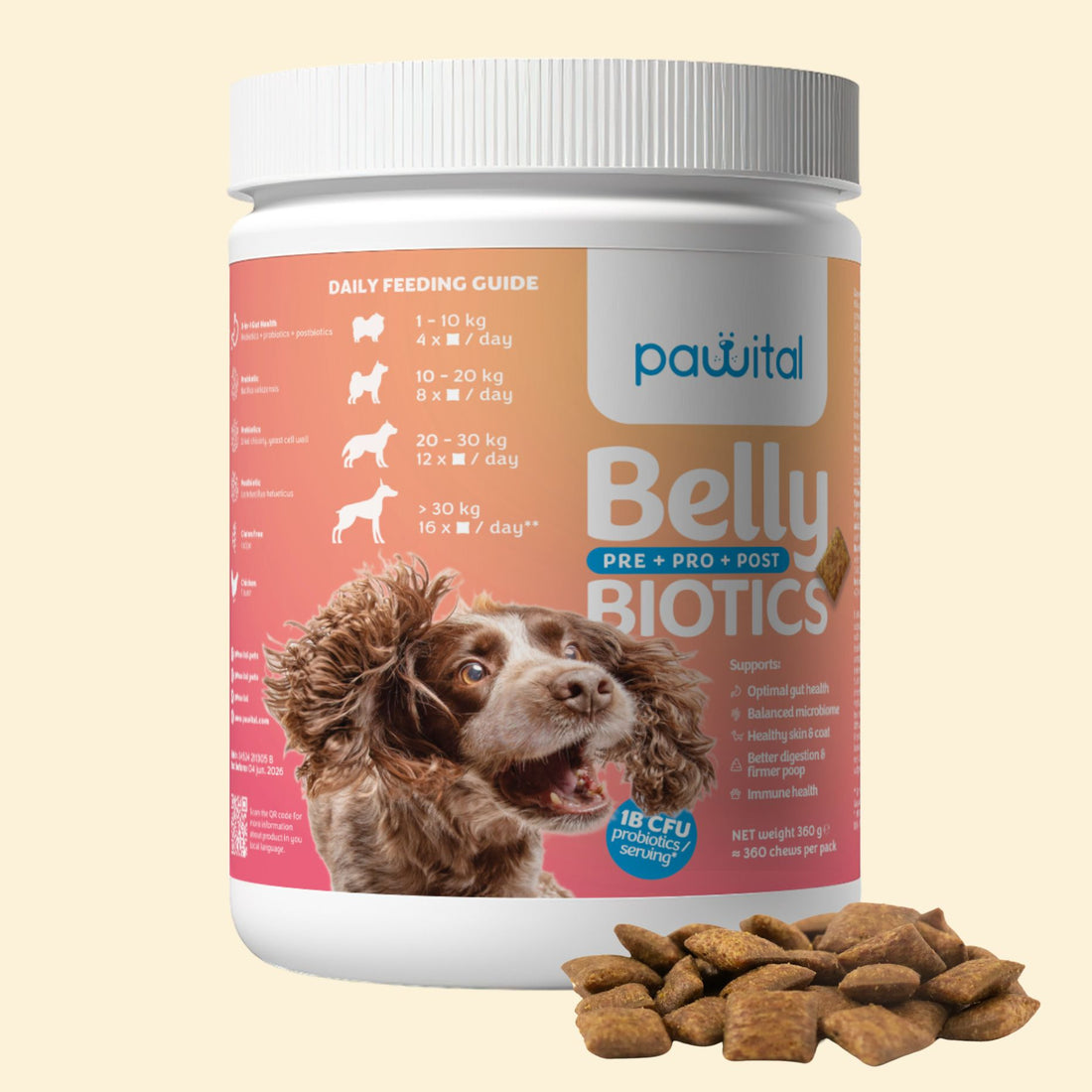 Belly Biotics (360 priboljškov)
- Regular price
-
€29,90 €79,90 - Regular price
-
€29,90 - Sale price
-
€29,90 €79,90
-
Belly Champ SLO
 Belly Champ SLO
- Regular price
-
€24,85 €104,90 - Regular price
-
€24,85 - Sale price
-
€24,85 €104,90
