

Is Your Dog’s Grass Eating Really a Problem?

1. Should You Worry When Your Dog Eats Grass?
Many dog owners get concerned when they see their pet munching on grass.
Questions like “Is my dog sick?” or “Will this hurt them?” often come up.
The truth is, grass eating is a very common canine behavior and, in most cases, not a cause for alarm.
Dogs are omnivores by nature and occasionally eat non-meat items. Still, it’s important to understand why they do it and when it might signal a problem.
2. Why Do Dogs Eat Grass? Top Reasons
Dogs eat grass for a variety of reasons, and most are harmless:
- Natural Instinct: Their wild ancestors consumed entire prey, including stomach contents full of plant material. Grass eating may reflect this instinct.
- Digestive Aid: Some dogs may eat grass to induce vomiting or to relieve mild stomach upset.
- Fiber Boost: Grass can provide extra roughage to aid digestion and bowel regularity.
- Boredom or Anxiety: Some dogs chew grass simply for stimulation or comfort.
- They Like the Taste: For certain dogs, fresh grass is just another crunchy snack.
3. When Is Grass Eating a Health Problem?

While usually benign, grass eating can be a red flag if paired with other symptoms. Watch for:
Compulsive Grass Eating
If your dog rushes to eat grass every time they go outside, ignores play or interaction, or eats it excessively until vomiting, this is considered compulsive.
It may signal deeper issues such as nutrient deficiencies, chronic gut imbalance, anxiety or stress, or gastrointestinal conditions like gastritis or inflammatory bowel disease.
Parasites or Toxins
Dogs may ingest harmful pesticides, herbicides, or parasite eggs present on contaminated grass. Warning signs include sudden diarrhea, vomiting, drooling, lethargy, abdominal pain, or refusal to eat. If you see these, seek veterinary help immediately.
Underlying Health Issues
Chronic grass eating, especially if accompanied by weight loss, poor coat quality, frequent vomiting, or loose stools, could point to gastrointestinal conditions or metabolic disorders.
4. How to Help?
Again, grass eating is predominantly a common dog behavior, unless joined by other signals.
Here’s a quick checklist to help you decide what to do based on what you are seeing.
WHEN to start helping your dog with a pre-, pro- and postbiotic
Start with pre-, pro-, and postbiotics if your dog:
- Has loose stools or gas
- Shows skin irritation or paw licking
- Eats grass sometimes but otherwise seems healthy
- Needs extra digestive or immune support (after antibiotics, during seasonal changes, or periods of stress)
WHEN to go to the vet as quickly as possible

Go to the vet ASAP if your dog:
- Vomits repeatedly after eating grass
- Has diarrhea with blood, mucus, or lasting more than 24 hours
- Becomes lethargic, stops eating, or shows abdominal pain
- Loses weight, develops a dull coat, or shows ongoing digestive issues that don’t stop after taking probiotics or digestive aids
5. Why probiotics help?

The gut plays a central role in both digestion and immune balance. By strengthening the gut, you can often reduce odd behaviors like compulsive grass eating:
- Prebiotics feed beneficial gut bacteria, helping them thrive.
- Probiotics introduce healthy microbes that improve stool quality, support digestion, and reduce inflammation.
- Postbiotics provide ready-made metabolites that calm the immune system, strengthen the gut barrier, and lower oxidative stress.
When combined, these ingredients restore microbiome balance and help calm the gut-skin axis — the same pathways that often underlie itching, paw licking, and potentially grass eating.
-
Belly Biotics (360 priboljškov)
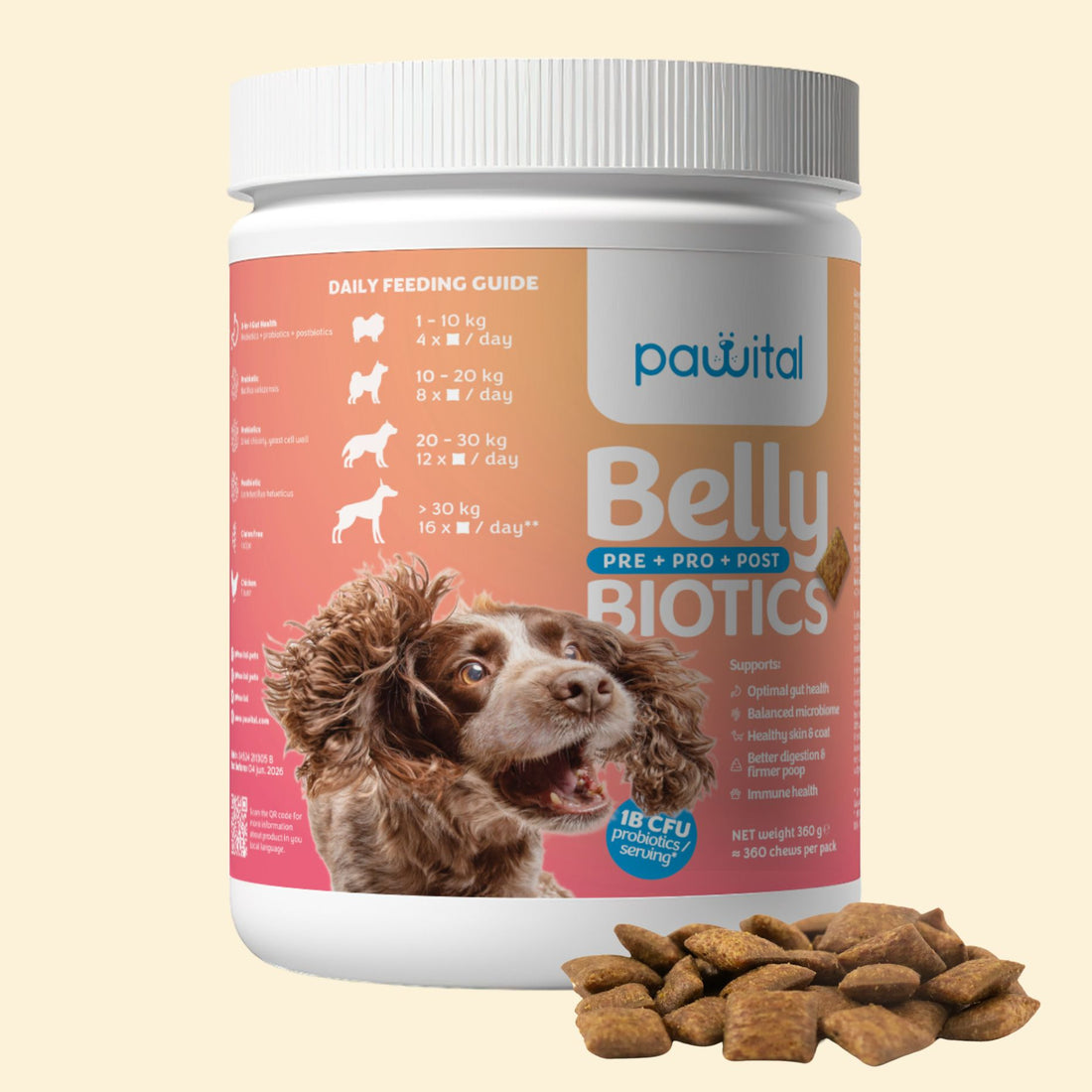 Belly Biotics (360 priboljškov)
- Regular price
-
€29,90 €79,90 - Regular price
-
€29,90 - Sale price
-
€29,90 €79,90
-
Belly Champ SLO
 Belly Champ SLO
- Regular price
-
€24,85 €104,90 - Regular price
-
€24,85 - Sale price
-
€24,85 €104,90
